Three months. Or one to six years.
The first is how long it should take, once you have been dismissed, to file a complaint with a labour officer and receive a decision. That is what the law says, on paper. The second is how long it can actually take if your employer stalls, if the matter involves unpaid wages or withheld benefits or a breach of contract serious enough to require the industrial court, if the process moves at the pace that processes in this part of the world so often do. One to six years. The law paints the three-month picture in theory. In reality, the latter is more likely. Only those with the knowledge and stamina to pursue it stand a chance of success.
Most people do not have that kind of time. Or money. Or endurance.
It is not a question of fault about why it was not three months in reality. But it helps explain why some people may be losing faith in litigation as a dispute resolution mechanism.
First, it is adversarial, with little room for the sort of give-and-take compromise that leads to resolution. Second, court backlogs make it a marathon rather than a purposeful sprint toward justice for all parties. Sometimes parties abuse the process by using procedural tools, such as adjournments and objections, to clog the system and frustrate their “adversary.” This is especially true when delivering justice in an adversarial system.
One hundred and thirty-six. One hundred thirteen.
Those 136 are the mediations that BarefootLaw has conducted so far in 2026, with a resolution rate of over 83%.
The woman who reached out to us had already spent three of those years waiting. Three years employed at a reputable institution, doing professional work, and not getting paid. Three years during which she presumably kept showing up to work. To do her job. To wait.
When she came to us, we gave her legal information about her rights, and clarity about what the law said she was entitled to do. She took that information and She wrote to her employer. She asked, formally and in writing, for an explanation of when her salary would be paid and what the way forward was. It was not an aggressive letter. It was the kind of letter the law contemplates and, in a functioning system, encourages.
The HR department refused to acknowledge receipt. They called her a troublemaker and not long after, she was dismissed.
She went to the labour office. Her employer appeared and offered the kind of promises that are designed to be non-committal. They were never fulfilled. She returned to complain. By this point, what she needed- accountability for unpaid salary arrears, recognition of an unfair dismissal- had moved outside the labour officer’s mandate. He told her to find a lawyer and take her case to the industrial court. Instead, she came back to us.
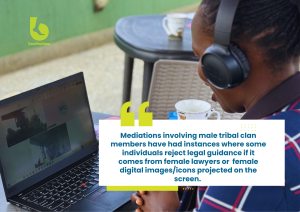
When she came back to us, we held a virtual call with the representative from her former employer, herself, and an accredited mediator from BarefootLaw’s legal services team, and together the parties reached an amicable settlement with achievable, reasonable timelines that all parties can follow through on.
We believe in the power of mediation because it allows two seemingly opposed parties and positions to have an honest dialogue without prejudice or fear that concessions will be weaponised against them.
The woman we helped did not need a courtroom. She needed her salary, transparency from her employer and a resolution that allowed her to move forward with her life. The formal system could not give her that in three months, not in six years and certainly not within the one month it took. This is why we believe more people are embracing mediation and alternative dispute resolution to resolve their disputes.
What many mediation resolutions lack, however, is enforceability. Without a mediation agreement, questions about enforceability linger. What if the employer does not honour the agreement? What if the promises made in good faith are broken? What recourse does the worker have?
What is therefore required is more mediation to produce mediation agreements, which are binding contracts with enforceability. When parties sign an agreement, they are creating obligations that can be enforced. This is the future of access to justice for those who cannot afford to wait and should not have to.
A note on the case:
The individual’s name has been withheld to protect her confidentiality. We obtained consent before sharing these facts from BarefootLaw’s case files and mediation records.