Lessons from Our Work
Digital Images and Gender Bias in Legal Service Delivery
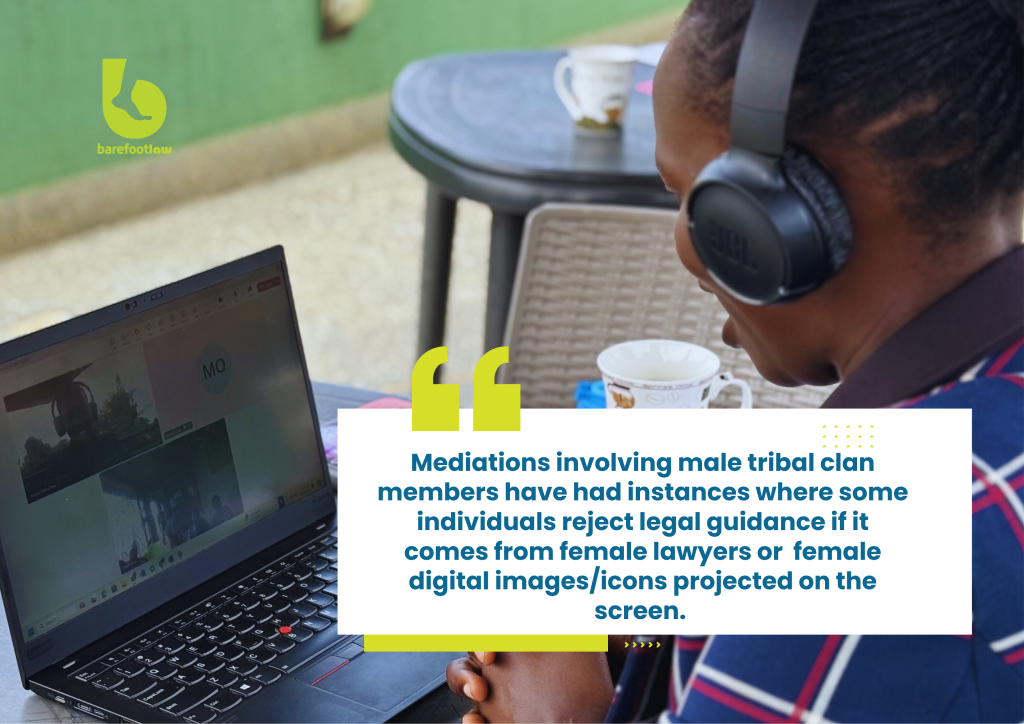
By Winnifred Acio In many Ugandan cultures, gender roles are distinctly defined. Men are traditionally viewed as leaders, breadwinners, and heads of the family, receiving respect and occupying most leadership positions in the cultural and political spheres. Women, on the other hand, are often the nurturers, caregivers, and mothers valued for their gentleness and supportive roles, usually within the home. While they are honoured for these roles within the community, cultural norms generally dictate that they cannot assume the roles designated for men. From this cultural perspective, men are expected to lead and make decisions, while women are usually expected to follow. This perception extends to the justice sector, influencing how legal services are received, particularly in grassroots communities. In many cases, men are expected to lead in every decision-making venture, including in legal hearings, while women’s voices are considered secondary. This bias has shaped people’s expectations of legal professionals and their willingness to accept legal guidance based on the gender of the lawyer providing it. How BarefootLaw’s Legal Tech Model Works To bridge the access to justice gap, BarefootLaw positioned BarefootLaw Boxes in Bala (Kole District), Paicho (Gulu District), and Nsinze Town Council (Namutumba District). These community justice points provide free legal consultations, mediations, and guidance on various issues, including child maintenance, Domestic violence, and Land disputes, among many others. What makes the BrefootLaw Boxes unique, however, is their technology-driven approach. While community members visit the physical BarefootLaw Boxes, legal assistance and guidance are provided virtually via Microsoft Teams. Individuals seeking help connect with lawyers remotely through video or voice calls without any direct physical interaction with the lawyers. The people served, therefore, interact and speak with the digital images of the lawyer handling the case. The Unexpected Challenge Despite its convenience and accessibility, this technology-based model has revealed underlying gender biases. In some cases, people specifically request male lawyers to handle their cases, believing that men are more educated, knowledgeable, authoritative and better adapted to handle and hear their legal matters. A particularly striking example is when handling customary land matters, where land is traditionally inherited through the male lineage. During some of the mediations involving tribal clan members, there have been instances where some individuals reject legal guidance if it comes from female lawyers or in this case, female digital images given through Video or voice calls. Some traditional clan elders have also often preferred male lawyers or male digital images on the screen, believing they align more with their traditions and reinforce their customs. Similarly, some clients disregard legal guidance entirely if delivered by a lawyer with a female digital image or voice, assuming they lack authority on the issue, further reinforcing the preference for male digital representations in such cases. These challenges illustrate how gender norms continue to influence trust and perception even in a digital space where physical presence is removed. The Road Ahead While technology can bridge gaps in access to justice, we realise that it cannot function as a one-size-fits-all solution. Each community has unique cultural and traditional beliefs, and these must be understood when designing legal tech solutions. Understanding these cultural contexts is crucial to ensuring that technology effectively serves diverse communities. One possible approach is allowing users to select the gender or digital image of the lawyer handling their case, regardless of the actual lawyer providing the service. Additionally, AI-generated voices tailored to societal expectations could help build trust in virtual legal services. This, on its own, could however, also present another dilemma. A dilemma where technology could potentially perpetuate existing gender stereotypes. We recognise that innovation should be a tool for transformation, ensuring that legal services promote equal access to justice for all. Our way forward thus includes a remedy of exposure therapy. To challenge and gradually shift cultural biases, legal tech solutions should introduce users to diverse representations of legal professionals and, in this case, different gender digital images. By allowing users to initially choose AI voices and images that align with their cultural expectations, and then progressively exposing them to a wider range of gender and identity representations, technology can help normalize diverse legal service providers. We believe that this approach will ensure that while cultural sensitivities are acknowledged, legal innovation does not reinforce existing gender stereotypes. Conclusion Technology has the power to break down barriers and bridge justice gaps, but its true potential lies in how it is designed and implemented. The experience with BarefootLaw’s legal tech model highlights that even in digital spaces, deep-seated cultural gender biases persist. However, this challenge presents an opportunity, an opportunity to reshape perceptions, foster inclusivity, and gradually shift societal norms.

BarefootLaw

0 Comments

Projects
University students at the forefront of innovating to increase access to justice in Zambia
Barefootlaw Research Team Innovations in access to justice are critical for promoting and advancing a just, equitable and sustainable society. BarefootLaw in collaboration with SAIPAR (Zambia), with support from the Charles Stewart Mott Foundation conducted research to understand, document and share innovations in access to justice in Zambia. As part of this research, a crowdsourcing contest was run in the country for 4 weeks calling for players in the justice space to share their innovation in improving access to justice. Among standout innovations, was a dynamic podcast created by university students. A group of students from the University of Zambia, the leading university in Zambia – started a podcast that aims to enhance and improve legal education in Zambia. The students behind The Law Talk recognized that legal knowledge is not only for lawyers – it is a lifeline for everyone. The students conduct research, develop research articles, review cases, disseminate, share and open debates on the podcast. These talks and lively debates tackle issues like land rights, family law, and workplace disputes, empowering listeners to navigate legal challenges confidently. The podcast brings the law to the people in the simplest form possible by breaking down complex legal concepts into relatable, actionable insights for the public. The initiative is also keen on student excellence as it acts as a tool for connecting law students from different institutions across the country to actively participate in improving the legal system while they are still students. In-addition, the initiative aims to build a network of seasoned legal researchers that contributes to the jurisprudence of the Zambian legal profession. WATCH here as the students explain more about their work: The students boast of; Initiating The Law Talk, a Podcast whose aim is to serve as a platform for all including the public, student lawyers, and practitioners to share knowledge on legal issues. Since its launch seven (7) months ago, The Law Talk has engaged around 1000 listeners nationwide, proving that innovative platforms can make justice accessible beyond courtrooms. Feeding the public with informed and reliable legal information. The students prioritize research to provide accurate information, for the public to make informed decisions. Providing a platform for young lawyers and students across Zambia to meaningfully contribute to legal education. Moving forward, the students are poised to expand their reach, with plans to invest in upgrading their podcast equipment, provide leadership and skills training for members, sponsor an annual national writing competition, and establish a self-sustaining social entrepreneurship venture using the award from BarefootLaw. They add that a portion of the funds will also sponsor winners of their Annual Writing Competition, which invites students nationwide to submit researched legal articles. This expansion reflects the students’ holistic vision to bridge legal education gaps, empower peers, and foster a culture of innovation to democratize justice in Zambia.
BarefootLaw
0 Comments
Lessons from Our Work
Marriage, Customs and Consent Beyond the Grave
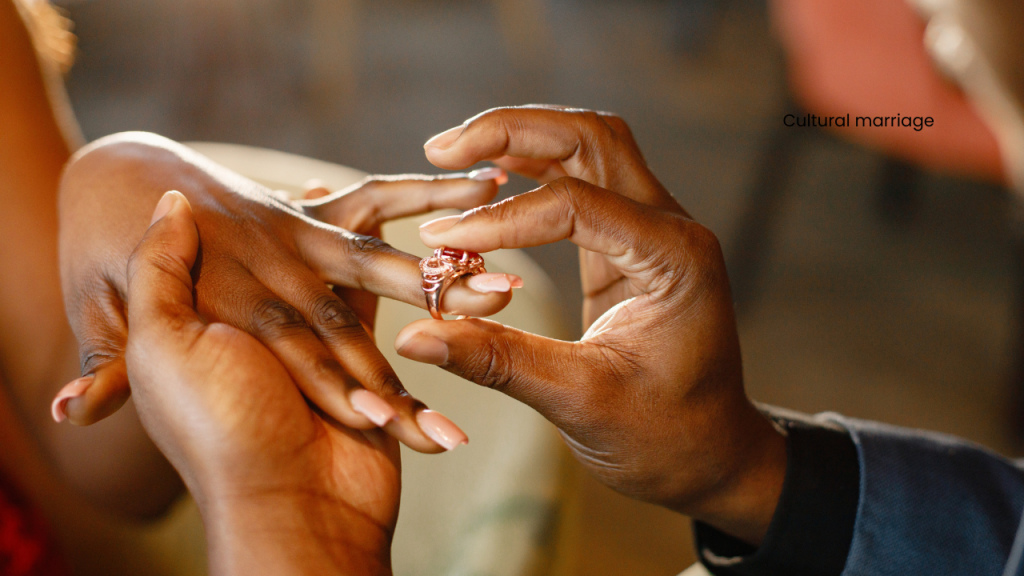
In northern Uganda, there exists a custom that many may struggle to understand. There is a customary practice where a man may be obligated to enter into a marriage with a woman after her death, resulting in a posthumous marriage. Recently we handled a case at the BarefootLaw Box in Paicho where a man who had been living with a woman but had not married her was forced to pay bride price before her burial could take place. The deceased’s body remained open and unburied for almost a week, which led him to sell land belonging to his other wife to raise the necessary funds for the bride price. This case and many others like these expose the stark contrast between customary law and the formal legal system. The latter, governed by statutes and principles of contract, age, precedent, consent, and legal capacity, finds itself at a loss when confronted with a practice that is neither explicitly recognised nor adequately addressed in written law. A Debt of Honour. The logic behind posthumous marriage is rooted in obligation and honour. In these communities, when a woman dies without being married, and yet had children with a man, it is considered a disgrace to her dignity and that of her family. The custom of these societies thus dictates that, what was denied to her in life must be given to her in death. The man she was cohabiting with, whether by his own neglect or delay, is made to marry her in a marital union after her death. This act serves to recognise her status, grant legitimacy to the children that she bore, and fulfil the community’s moral and customary expectations. From their perspective, this practice is a form of justice. It ensures that a woman, even in death, is not left without a place within the lineage of the partner she lived and bore children with. It is a safeguard to her legacy and provides social security for the children left behind. Where Written Law Falls Silent The Ugandan legal system, like many countries in Africa, is deeply rooted in colonial legal frameworks. Marriage, within this structure, is an agreement between two living parties (male and female), making the practice of compelling a man to marry a deceased woman legally problematic. Fundamental legal questions arise like who consents to the marriage? What are its legal implications? Can a deceased person enter into an agreement? The law’s silence on this issue has created a vacuum on the way forward. No written law or court ruling clearly addresses how such a practice should be harmonised with written law. The challenge, therefore, is not to merely to dismiss the practice as bizarre but to critically engage with it in a manner that respects both cultural realities and legal principles. As such, the question of consent and legal recognition of posthumous marital obligations could be considered in light of legal cases in the broader burial rights jurisprudence. in Namusoke Annet Kiwanuka v. Eva Amuge and Two Others, Miscellaneous Cause No. 4 of 2023, the High Court in Uganda examined how burial rights are intertwined with a deceased person’s wishes. The court stated that the place a person is buried is closely linked to the person’s wishes before they died, the duty imposed on those closely related to the deceased during his lifetime to bury him and finally whether they had established a home. Additionally, the court stated that the custom to which the deceased belonged to must come into consideration in such an instance. Similarly, in SAN v. GW, Civil Appeal No. 01 of 2020 [2020] eKLR, the Court of Appeal emphasised that while the wishes of the deceased are important, they are not binding, as a dead person cannot actively participate in their own burial decisions. These cases and more, highlight the legal complexities surrounding posthumous obligations and reinforce the principle that customary practices, though influential, must align with the broader legal framework. By drawing from the similarities between burial rights and posthumous marriages, the legal dialogue on these issues could evolve to address the intersection of tradition, customs, consent, and written law. These conversations however should be led by vital questions like can communities redefine the practice to uphold the deceased’s dignity without coercing the living? Can the law offer alternative ways to recognise and honour the deceased without compelling an unwilling man to marry a deceased woman? These are questions that require dialogue and legal innovation with the backdrop of cultural sensitivity. The Journey Ahead As Uganda continues to grapple with the intersection of statutory and customary law, we as BarefootLaw intend to remain at the frontline of these conversations. Through our work, we see firsthand that justice appears differently to different people. The challenge is to bridge the gap to recognise the wisdom in custom while ensuring that human rights and legal protections are not undermined in the process. Posthumous marriages, as unsettling as they may seem to those outside these communities, are a reflection of the broader struggle between formal legislations and tradition. However, rather than dismissing them outright, it is time we asked, how can we shape legal systems that do not just impose rules from above but respond meaningfully to the lived realities of the people they serve? References Namusoke Annet Kiwanuka v Eva Amuge and Two Others Misc Cause No 4 of 2023 (Uganda HC). SAN v GW Civil Appeal No 1 of 2020 [2020] eKLR (Kenya CA).
BarefootLaw
0 Comments

Projects
A leap towards greater access to justice: mobile legal clinics in Choma, Zambia
Authors: Barefootlaw Research Team BarefootLaw, with support from the MOTT Foundation, conducted research in Zambia to understand and bring to the forefront innovations that aim to improve access to justice in the country. A local crowdsourcing initiative revealed a range of efforts, with mobile legal clinics emerging as one of the standout innovations. In this article, we zoom in on mobile legal clinics conducted in Choma by Justice for All Network (J4N). Zambians living in remote areas are often economically disadvantaged and encounter major obstacles in accessing legal assistance. These challenges include long travel distances, inadequate transportation, and limited awareness of their legal rights and available services. As a result, those who are most in need frequently go without essential legal support and are left without any means of redress. Mobile legal clinics are designed to fill this critical gap. Choma J4N launched mobile legal clinics to bring legal services directly to remote and underserved communities by setting up temporary legal service centres in various locations. The clinics educate residents about their legal rights and processes for seeking justice and provide a platform for reporting grievances. The clinics also serve as a platform for reporting corruption and abuse of public office – promoting accountability among public officials and institutions and helping to cultivate a culture of integrity and responsiveness. On top of immediate assistance, the network facilitates the documentation and referral of complaints to relevant public institutions, tracks and follows up on cases to ensure that complaints are addressed and resolved in a timely manner. The Model J4N is a network of members ranging from legal professionals to legal support staff from government and non-government agencies who contribute their time and expertise voluntarily or at a minimal cost. The network sets up temporary legal clinics in different communities and locations, and members travel to these communities to provide justice services. Members from government departments include magistrates, the Zambia police and the Legal Aid Board, among others. Innovativeness of the model Innovation has been defined as a new or improved product or process that varies greatly from previous products or processes and that has been made available to potential users (OECD, 2018). A key element of innovation for the mobile legal clinics in Choma is its operation as a collaborative effort and partnership that brings together civil society organizations (CSOs) and government departments. Unlike previous models of legal clinics, professionals from each of these agencies and entities collaborate voluntarily to contribute their time and expertise to the clinics. These in-kind contributions make the model more cost-effective and sustainable with lesser reliance on donor funding for continuity. Additionally, the collaboration is able to leverage unique resources from each partner to chart and create ways to effectively provide redress for justice issues faced by communities. Notably, its mobile setup means that the model is lean on establishment and maintenance of permanent structures and infrastructure that is often costly. WATCH to learn more about Choma Justice for all Network from Joe Mapiki: Impact Mobile legal clinics in Choma have bridged gaps in legal service delivery – improving access to justice for communities in remote and underserved areas. The clinics are accessible and affordable to clients who would otherwise have used more time and higher costs to transport themselves to justice centers. The clinics have created awareness and educated community members about their rights and processes available for seeking redress. To consistently improve on their effectiveness, as well as foster accountability and responsiveness of the justice system, the J4N network tracks and follows up on cases to ensure that complaints are addressed and resolved. Lessons This initiative serves as a learning model for countries in Sub-Saharan Africa with contexts similar to Zambia. Its collaborative framework—bringing together Civil Society Organizations, government departments, and law enforcement agencies—offers a flexible and adaptable structure that can be replicated in other locations and countries through the inclusion of additional partners as necessary. The model guarantees provision of justice services to every person regardless of their social class or financial status. References OECD/Eurostat (2018), Oslo Manual 2018: Guidelines for Collecting, Reporting and Using Data on Innovation, 4th Edition, The Measurement of Scientific, Technological and Innovation Activities, OECD Publishing, Paris, https://doi.org/10.1787/9789264304604-en.
BarefootLaw
0 Comments

Projects
Acholi Paramount Chief applauds BarefootLaw for decentralizing access to the law
While giving his closing remarks during a legal sensitization in Paicho Subcounty, Gulu District in Northern Uganda on Tuesday, 26th May 2025, the Paramount Chief of Acholi, Rwot Onen David Acana II, said that the digital legal services offered at the BarefootLaw Box in Paicho “demonstrate that laws do not only belong in the cities, but laws can also be decentralized for people in the villages.” The sensitization convened over two hundred (200) clan leaders from the eight (8) districts of the Acholi sub-region for a knowledge exchange on how to harmonize cultural justice mechanisms and the law. The content and theme of the training were informed by various cases received at the BarefootLaw Box, where cultural practices differed from processes stipulated in the law. Interesting perspectives during the training We engaged the leaders in a two-way discussion on issues including educating them on the laws that provide for customary leaders, posthumous marriage practices, the return of dowry, and corporal punishment for misdemeanors etc. “One of the most contentious topics was on the return of dowry,” Wabule, one of the training lawyers, reported. The practice in the community is that when a marriage ends, the parents of the wife are expected to return the full amount of dowry that had been given at the beginning of the marriage. “The leaders argued that sometimes the women leave marriages in pursuit of other love interests, it is unfair to their husbands, therefore justifying the practice of return of dowry,” Ocaya, another lawyer, explained. During the training, Wabule informed them that the traditional custom and practice of demanding a refund of dowry is unconstitutional and “dehumanizing to women”. “The return of [the] dowry connotes that the woman in marriage was some sort of loan,” she stated. By the end of the heated session, the leaders agreed that it is “unfair” for the parents of the woman to be asked to refund dowry after years of marriage, some further stating “it was unlikely they would have kept the property .” The Resolve- Harmonizing culture and the Law Today, we are here to bridge the role between culture and the law. And to educate each other on how customary leaders, and lawyers like us, can better deal with problems in our communities. We are here to look for the good in the western system, and the good in our system, and find a way of making them work together, for the benefit of our people, as we create peaceful communities in which people can thrive. – Gerald Abila, CEO and Founder of BarefootLaw. Hon. Charles Okello, the Local Council (LCIII) commended the leader for honoring the training in large numbers. “One mango tree has gathered over 30 clans of Acholi. That is what we need to do as Acholi people- gather to reconcile,” he said. BarefootLaw’s Chief Executive Officer (CEO), Gerald Abila, added that for so many years, customary leaders were the people to whom people in communities went to have their legal problems resolved. However, during colonialism, the leaders were ignored and their ways were called backward. “It is because of this that we have seen so many problems left unresolved in our communities, why justice has become expensive, and why our community people go to court and they do not understand English, “ Abila explained. He further stated that some of the dispute resolution mechanisms of the traditional system are “tried and tested.“ His Royal Highness Rwot Acana II thanked BarefootLaw for being forward-looking by bringing this training to the people of Paicho and Acholi, stating that he gained a tremendous amount of knowledge. ” With resources allowing and with time allowing, this should go to all the chiefs of Acholi, where it will reach all the people of Acholi.” He further encouraged all the leaders to heed the lessons they had received and desist from continuing with unjust practices, especially against women and girls, while carrying out their roles. This dialogue between the customary and formal justice mechanisms enables us to work together to resolve disputes better and create more peaceful communities in which our people can thrive.
BarefootLaw
0 Comments
Legal Resources
BAREFOOTLAW CRIMINAL JUSTICE FAQS
BAREFOOTLAW CRIMINAL JUSTICE FAQS: WHAT HAPPENS WHEN A CRIME IS COMMITTED? CRIME 101 What is a crime? A Crime is any conduct that is forbidden by the state and to which a punishment has been attached. If I cheat at school, is it a crime? No, cheating at school is not a crime. However, it could be seen as a breach of the acceptable school rules, guidelines, or regulations about sitting examinations and may entitle you to the school penalties such as expulsion from the school. When are you said to have committed a crime? You are said to have committed a crime when you do something that is prohibited by law. For example, the law does not allow you to beat other people, if you beat your neighbour then you are said to commit a crime known as assault. If you also fail to do what the law requires you can be said to commit a crime. For example, you are required to look after your children and you refuse, then this omission (failure to act) is also a crime called child neglect. where a conviction by a competent court is made or pronounced stating that a person intentionally committed an unlawful act against the state. Who is a criminal? A criminal is the title given to a person who is convicted of an offence by a competent court. Before you are convicted by court, you are only a person accused of that crime. If I tell a boda boda to avoid a road checkpoint, am I a criminal? You can participate in a crime in three different ways. One is by actually doing the prohibited act. Two by helping someone else commit the act that constitutes the crime. You can also encourage someone to do the wrong thing. This last one is called abetting. Therefore, if you know that the boda boda is headed towards a checkpoint because he/she is in the wrong and you assist him/her to dodge it then you may be liable for the crime because you abetted the commission of that offence. What about if the president declares something is a crime, can I be prosecuted for it? No, the president is part of the government arm known as the Executive. The part of government responsible for the making laws about crimes is the legislature or the ministries. Therefore, if the President says that something should not be done, then the responsible ministry can follow up and come up with a law that prohibits that. For example, when the lockdown was announced, the president made several directives to combat COVID, and the Ministry of Health had to make a law on public health to back these up. However, if there is no law then this cannot be a crime. For example, if he says those who walk without masks will be tried for murder, then this cannot be a crime of murder because there is no law that provides for that. Does a crime ‘expire’? No, it does not. There is no expiry date (this is called a statute of limitation) on any criminal offence that you have been charged with in Uganda. If you are charged with a crime, then there is no expiry date on it, even if you take 10 years in hiding and return, the charges against you can be resurrected and you face the law. What is the difference between a national and international crime? By law (international law this time) all countries are independent of each other and therefore have powers to make laws that govern their citizens. Because of this, they can decide which court is deemed as unlawful and should be punishable. If a person commits some of these crimes, they have committed a crime under the national law. On the other hand, the countries of the world have over time agreed on certain crimes that affect everyone in the world and deemed them as international crimes. Examples include crimes against humanity, war crimes, genocide, piracy etc. These are international crimes which any country can arrest and prosecute an individual for whether they are citizens or not if they are within that country that has agreed to prosecute those crimes. Who is a suspect and how different is this from a criminal? A suspect is a person who may or may not have committed a crime and the police are investigating to ascertain if he/she in fact did. A criminal on the other hand, is someone who has been charged, prosecuted, and convicted of the offence by a court of law. What about an accused person? (PENNIE) An accused person is someone who has been formally charged with a crime but has not yet been convicted in the courts of law. This happens after the Director of Public Prosecution (DPP) has authorized the prosecution of that person. ARRESTS If I get someone arrested, am I supposed to feed him/her? No, you are not supposed to feed the person whose crime you reported to police. This is because the police have a budget set aside to feed suspects who are remanded at the police station. If the person is then remanded to the prison, the Uganda prison service is responsible for their wellbeing, not you who reported the case. Do police need permission from me to release a person I reported? NO! The police do not need your permission to release a suspect you reported. This is because even a suspect (the person you reported for an alleged crime) still retains the right to be released after 48 hours after their arrest if they have not been charged and the law still presumes that they are innocent until they can be proven guilty in a court of law. Because they are still ‘innocent’ you cannot take away their rights given by the constitution. As a courtesy, the police may inform you that they are going to release the suspect on police bond so that you do
BarefootLaw
0 Comments

Legal Resources
DATA PROTECTION FAQS
DATA PRIVACY AND PROTECTION FREQUENTLY ASKED QUESTIONS (FAQs) DATA PROTECTION: WHAT DOES IT HAVE TO DO WITH ME? From the onset, we should be clear that personal data/information is not only at risk on social media but in many other dealings we engage in. HOWEVER, consider the following. There are currently about 2.80 million social media users in Uganda as of January 2022? Of these, 2.5 million of these Users are on Facebook, about 582,100 users are found on Instagram. If you follow us on either Facebook, Twitter, Instagram, and other social media platforms, congratulations you are part of the 2.8 million users that are based in Uganda. Most of us tend to give permissions for other people to use information about us, to collect information (and do certain things) with our personal information. Another interesting fact is that although in most countries a child is a person below 16-128 years, most social media platforms allow persons who are 13 years and above to sign up for an account. If you are one of the 13–18-year-olds, or a parent/guardian of one, then this is essential reading. WHAT IS DATA AND WHAT AMOUNTS TO DATA? Simply put, it is information that describes or identifies someone or something. Personal data is any information which when exposed, can enable someone else to identify you. Personal data can include pictures, texts, sounds, even your expression of an opinion (for instance, posts on social media). Other common examples include your National ID Number (NIN), age, nationality, occupation and academic qualifications, email addresses, phone numbers, salary details, bank account information and family member’s personal details. It is evident, therefore, that this data should be protected at all costs because it can be harmful to the owner of the information if it is misused or falls into the wrong hands. HOW DO OTHERS GET YOUR DATA? There are usually 3 ways that people get your data VOLUNTARILY: In a perfect world, your personal data would only be got by others if you willingly gave it to them. This is what the law also desires, that your personal data should only be given or taken with your permission (consent). If a person comes to your home and requests that you share your mobile phone number with them so they can send you messages about what they sell, you have a choice to accept and give them this information or to refuse. If you know what information is required and you make an informed decision to give it to them, then you have voluntarily shared your personal data. MANDATORY: There are instances when the law requires certain data from you as a MUST or allows someone to take that data with or without your permission for a specified and lawful purpose. For example, a population census is a must and everyone is required to disclose certain personal data to the government whether they want to or not. Mandatory data collection can include: 1. when there is mandatory immunization of children. 2. if there is a public duty that everyone must perform such as community cleaning, data about all residents in that area may be taken without their permission to make sure that everyone participates. 3. if it is a matter of national security such as when a crime needs to be prevented or to prosecute someone or carry out investigations. For example, as the suspect of a crime, your personal details may be taken to enable investigations to be carried out. 4. for medical purposes and for compliance with a legal obligation such as the payment of taxes. URA may not need your permission to check your transactions or bank account details if they are following up on unpaid taxes. QUALIFIED (CONSENT REQUIRED AS CONDITION FOR USE): There are also times when, before you can use a certain service or product, you are required to give the service provider permission to collect and use your personal information. In this case, no one forces you to give consent (permission), but for you to proceed further in using, consuming or enjoying the product or service, you must first give the required consent. This is commonly found when you download applications for your smartphone, or if you want to sign up for an email address or open a social media account. WHAT YOU NEED TO KNOW IF YOU ARE GETTING/COLLECTING PERSONAL DATA The law (Data Protection and Privacy Act 2019) requires that anyone who collects or handles personal data from people should consider the following when collecting it: Be accountable to those whose data you are collecting. (This means telling them what you want the data for and for how long so that they can give informed consent to the collection of their personal data) Make sure the information you are collecting is done with Lawfulness and for a lawful purpose. Transparency and participation of data subjects in collection, processing .This means that you must be clear with how you will use the information and offer them a chance to make changes to the information collected where necessary. The data collected must be the amount that is adequate for the purpose. This means that even if there is more data but you do not need it, then you should not collect it. Only the data that is relevant for the project or activity should be collected. Minimisation of data collected; (only take what is needed for the purpose) Data must be retained for only the period authorised by law or for the purpose that was originally stated. Quality and accuracy of data collected, processed, used or stored. As the person collecting personal data, you must make sure it is accurate so it does not mislead or misrepresent someone or the facts. You must ensure that there are security safeguards so that the privacy of the personal data is storage of personal data. WHAT IS CONSENT? Consent refers to the permission for something to happen or the agreement to do something. When dealing with personal data, the law requires that consent of the person whose
BarefootLaw
0 Comments