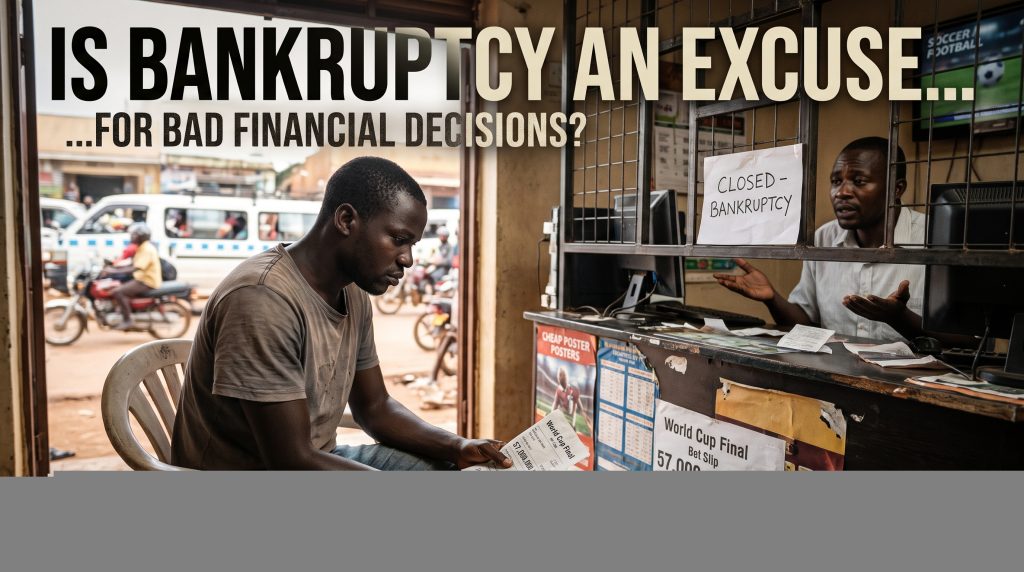
Omoding’s dreams all came true when Spain beat Argentina in the World Cup final. His receipt showed that he was supposed to win 57 million for his bet. The moment the match ended, he went to cash his receipt. They told him it was a lot of money, so he should return on Monday to ‘collect his winnings’. On Monday morning, the betting company told him they were bankrupt and could not pay him.
Bankruptcy?
“What is that even?”
Well, the law recognises an essential fact about life: that sometimes, things can go wrong even if you put your best efforts into a venture. They say failure is never final, and the law believes that too. So much so that it created a way out to ensure that those who have failed while striving in life are not punished for trying their best. Instead, the law tries to protect them and give them another chance to try again. That ‘way out’ is the branch of law known as bankruptcy (when it relates to an individual) or insolvency (when it relates to a legal person like a company).
That legal person I mentioned earlier can be the registered company you see. So, your local sports betting company can possibly be a victim of ‘life,’ as well. However, these rules aren’t meant to be an excuse to run from honest, good-faith responsibilities or to make irresponsible financial decisions. On the contrary, these rules require you to be transparent with everyone you owe before you are protected and given another chance to do business again.
First, what is bankruptcy and insolvency?
Insolvency happens if a business fails to satisfy (pay) its debts when they come due, and there is no immediate hope of a change in circumstances; it may have to close its operations (this is called winding up) and choose this insolvency route. First though, it must advertise publicly to let you and others know that it is undergoing this process. Even if a company has run out of cash to pay you, that does not mean there is no other way for you to recover your monies. Under this law, you are a creditor, and creditors have a right to be paid back even when the company’s assets are sold, because that can raise the money and ensure you don’t lose a bet you had already won.
So how do you safeguard yourself if you are doing business with that company on credit? Look out for Part 2 of this conversation.